
Products, just like people, only have one chance to give a first impression.
Whether your customer is setting up a high-tech device out of the box, using a new service, or using a new software application, getting those initial moments right is the first opportunity to build trust.
Our work with Meta on Quest device testing has shown us how crucial it is to focus on the first impression to deliver truly exceptional, market-leading products. For teams that want to achieve these same goals, we’ve outlined the steps we took so anyone can apply them to their own product research initiatives.
In this case study, we’ll explain why a human-centred perspective matters, and we’ll share three ways to conduct strategic research to create products that don’t just “wow” but also create more significant impact right out of the box.

MIND THE GAP
We’ve all been there… we open the box for a new gadget with anticipation and expect to start using it immediately. In UX, we call this the Out Of Box Experience, or OOBE. The steps seem clear, but it just doesn’t work. You go online to see if anyone else has had problems.
If you’re lucky, you’ll find a tutorial on YouTube and get past the glitch so you can finally use the product. You’re relieved but the excitement of your purchase is tainted with disappointment.
Of course, if you’re unlucky you might find nothing at all. You’ll spend days (or weeks) waiting to hear from a support person before you give up, return it, or accept defeat as you relegate the gadget to a box in your closet.
In a product world, often no single team ‘owns’ the New User Experience, aka NUX. Marketing is responsible for attracting new customers, product is responsible for the overall performance of a system, packaging and instructions can be other departments, and the operations team manages the customer experience once they are ‘in the system.’
With different parts of the organization managing different aspects of the product experience, sometimes from a user perspective, there is a big gap in the steps from purchase to being a happy customer.
OPTIMIZING OOBE FOR NEW USERS
Conducting thorough user testing is a proven way to optimize key moments in a new user’s experience.
For physical products, the Out Of Box Experience can set the tone for what the product will be like. And these days, most products from electric vehicles and e-bikes to garden sprinklers and garage doors can be set up and managed with a device. Since getting these working together is essential, this process needs to be bulletproof.
For Meta Quest’s Extended Reality headsets, we knew creating a wow factor was key, since this was an opportunity to cultivate an excellent first impression for new users of their product and the potential for XR technology.
STRATEGIC RESEARCH FOR OOBE
Incorporating a program of strategic research related to OOBE is how world-class products create and maintain great experience for new users. Three factors are key:
- Collaboration
- Performance assessment over time
- Researcher partnership
Here’s a quick dive into each of those factors.
COLLABORATING FOR A HOLISTIC PERSPECTIVE
Whether it’s a device or application experience, research can deliver a holistic perspective of the new user experience. Various teams have input. As researchers, we must integrate a broad spectrum of research questions from these teams and their different perspectives, especially since many do not share the same goals.
For example, the packaging team may care most about wowing a user with simple design. At the same time, the education team might prioritize a user’s retention of instructions.
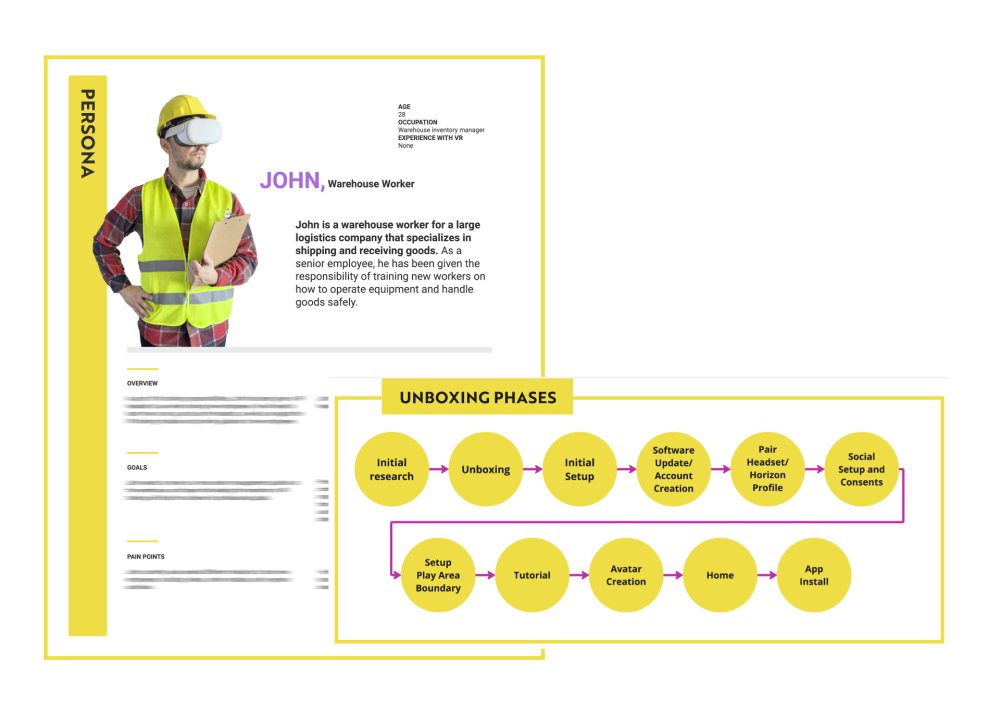
The key to success is taking a holistic, human-centred perspective, assessing the onboarding journey from marketing materials and packaging, to account creation and education, to device fit and function.
This ensures there are no gaps in the new user experience as it’s designed intentionally and not left to chance.
PERFORMANCE ASSESSMENT
To optimize performance, you need to be able to measure NUX in the same way over time. As such, developing a performance framework is the first step.
Spatial consultants work with the client to develop key performance indicators (KPIs) and relevant metrics that provide a broad-based holistic evaluation of the experience across audience groups, geographics, and so on.
Repeatable studies allow clients to assess changes and how they impact the onboarding experience over time; both before and after product launch, and from one model or service to the next.
Broad-based studies can be supplemented with more tightly defined assessment areas, such as for accessibility, privacy features, or for novel interactions such as using voice or hands rather than controllers to navigate. This helps to ensure safe and comfortable experiences for everyone.
RESEARCH PARTNERSHIP
Finally, the last component of strategic research is to work with experienced product researchers. As experts in the field, they can deliver immense value to product teams by helping them manage the workload and uncover meaningful insights they might overlook.
For fast-moving product development, researchers need to adapt quickly and have the flexibility to work with prototypes of varying fidelity, sometimes switching between multiple prototypes in a single interview session. This demands close collaboration with the tech team to develop a viable session flow and troubleshoot any tech issues that arise.
In our research partnership with Meta, we’ve used an array of qualitative, quantitative, and mixed methods approaches such as interviews, observation, and surveys. This approach enables us to marry statistical trends with the thoughts, feelings, and behaviours of prospective buyers.
The gold is the research insights and highlights that help product teams better understand their users’ journeys, address usability issues, and prioritize tools and features that have the most significant impact.
Working in partnership throughout the product development process is ideal, but for smaller product teams serious about retaining customers, at a minimum you shouldn’t be ‘shipping’ until you know what ‘receiving’ looks like from your customer’s perspective.
ARE YOU DOING OOBE RIGHT
When it comes to creating an outstanding Out Of Box Experience, getting it right is crucial for establishing a positive first impression and building long-term trust with your customers.
Thankfully, with thorough user testing and focused insights, you can identify and address potential gaps before they ruin excitement of new purchases.
By dissecting our collaboration with Meta on Quest device testing, it’s easy to see the importance of strategic research and device testing to optimize new user experiences. To learn more about our research services, contact our team today and we would be happy to answer any of your questions.